SpaceX’s first public earnings call: the vertical-integration masterclass
As a listed company (SPCX), SpaceX nearly doubled revenue, nearly tripled adjusted EBITDA, and laid out an aggressive path to $100 billion ARR by December 2026 — with Starship, Starlink, and AI as the three pillars.
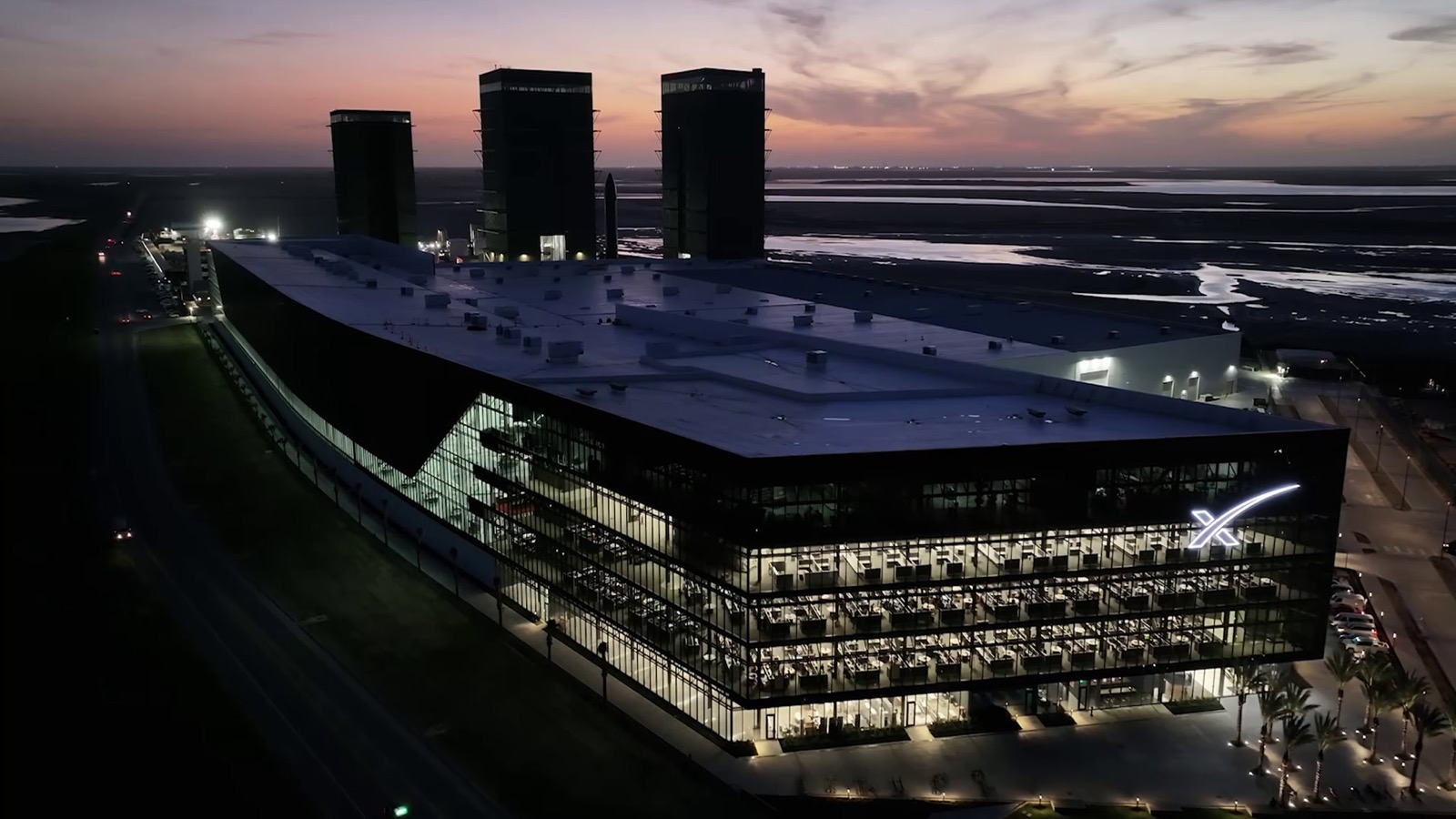
SpaceX · Starfactory
The debut call
SpaceX’s first public earnings call as a listed company (SPCX) on August 4, 2026, delivered a masterclass in extreme vertical integration, ambitious scaling, and long-term capital deployment.
Revenue nearly doubled year-over-year to $7.8 billion while adjusted EBITDA nearly tripled, losses narrowed sharply, and management laid out a credible (if extraordinarily aggressive) path to $100 billion in annualized revenue run-rate by December 2026 and $1 trillion in revenue by 2030. The stock rose sharply in regular trading before giving back gains after hours as investors digested the scale of capital spending—particularly on AI infrastructure—and an impending lock-up release.
Here is a full breakdown of what was said, the numbers behind it, and what it actually means.
The numbers: explosive growth across every segment
SpaceX reported Q2 2026 results (ended June 30) as follows:
Revenue: $7.8 billion, +92% year-over-year (from $4.1 billion) and strong sequential growth. Net loss: $541 million (or roughly –$0.09 per share), improved by $467 million from the year-ago loss of ~$1.0 billion — beating consensus expectations for a larger loss. Adjusted EBITDA: $3.5 billion, +191% year-over-year. Operating loss narrowed dramatically to roughly $143 million from nearly $1 billion a year earlier.
Cash, cash equivalents, and marketable securities: $100 billion. Backlog: $47.5 billion. Capital expenditures: approximately $18.4 billion in the quarter, of which ~$15.8 billion went to AI compute infrastructure. Management indicated the next two quarters should look similar.
Connectivity (primarily Starlink): $4.3 billion revenue (+66% YoY, +32% sequential). Income from operations $1.7 billion (+79% YoY). Segment adjusted EBITDA $2.6 billion. Starlink ended the quarter with 12.0 million subscribers (exactly double the year-ago figure, with +1.7 million net adds in the quarter—the strongest yet). ARPU held steady at $66. Consumer revenue ~$2.5 billion; enterprise & government ~$1.8 billion (+108% YoY). Over $6 billion in multi-year U.S. government Starshield contracts were awarded in the quarter.
AI: $2.6 billion revenue (+247% YoY, +213% sequential). This was the first quarter of positive segment adjusted EBITDA (~$1.1 billion). Operating loss narrowed to $1.3 billion. Nameplate compute capacity reached 1.4 GW (up from 0.4 GW a year earlier).
Space (launch): $962 million revenue (+29% YoY, +55% sequential). Segment adjusted EBITDA still negative at –$205 million as Starship R&D ramped. SpaceX flew 38 launches in Q2 and 78 in the first half of 2026, delivering 1,041 metric tons to orbit—overwhelmingly for its own Starlink constellation, but with a healthy external customer mix.
The company closed its historic IPO in mid-June, raising ~$85.7 billion net, and followed with a $25 billion investment-grade bond offering. The balance sheet is fortress-like.
What management actually said on the call
Elon Musk’s opening remarks set an expansive tone. He emphasized three pillars: Starship, Starlink, and AI compute + models.
On Starship: Two successful Version 3 flights in the past 90 days (Flight 12 in May and Flight 13 in July). Flight 13 achieved all major objectives, including deploying production V3 satellites, in-space Raptor relight, and the softest splashdown yet with an intact heat shield. Musk stated: “I don’t want to jinx it but I think we can consider the heat shield problem solved at this point. We do not see any technical obstacles to achieving full and rapid reusability.” Catch attempts of both booster and ship are planned this year (possibly as early as the next flight, pending regulatory approval). Cadence is expected to rise rapidly toward at least one flight per day within about a year. Long-term ambition: well over 1 million tons to orbit per year (versus ~2,500 tons currently via Falcon), ultimately potentially 10 million tons. Musk stressed that SpaceX encourages competitors to copy Starship and even launches rival constellations at the same fair prices it charges itself.
On Starlink: V3 satellites are roughly an order of magnitude more capable than V2. Combined with Starship’s ability to deploy far more of them, the company sees roughly two orders of magnitude more bandwidth. Even if revenue per bit falls by 10x, Starlink revenue could still rise 10x. Musk went further: “It’s not out of the question that at some point, Starlink will deliver a majority of the world’s internet, at least in countries where we’re allowed to operate… It’s less than 10 years.” He tied this to exploding bandwidth demand from AI, humanoid robots, and vehicle robotics—arguing that computers and robots will generate/consume vastly more bits than humans ever will, and that only a massive LEO constellation can serve that need.
On AI: Grok 4.5 (released in July) was a major step; Grok 4.6 was expected the following week and 4.7 a few weeks later. Grok 5 (before year-end) will incorporate the entire corpus of SpaceX engineering data from 25 years, which Musk believes will make it “by far the best engineer.” Compute capacity is scaling faster and more efficiently than anyone else: >2 GW by end-2026 and closer to 10 GW (with power/cooling targeting higher, potentially 15–20 GW projects) by end-2027. SpaceX is going exclusive with Nvidia’s Vera Rubin architecture. It expects a very significant percentage of Nvidia’s GPU output next year. The company is also developing “Starmind” orbital AI satellites based on an optimized Vera Rubin NVL72 design and plans to use the same simplified architecture on the ground. The $60 billion Cursor acquisition (expected to close soon) will accelerate the enterprise AI opportunity.
Gwynne Shotwell detailed operational and commercial momentum: Starlink now available in 167 markets with ~10,200 operational satellites delivering ~800 Tbps of downlink capacity. Airline wins (American, Southwest, Virgin Atlantic, Iberia, Aer Lingus) and mobile partnerships (SoftBank, NTT Docomo, Spark NZ) are accelerating. Enterprise customers are sticky; the company has never lost one. Aviation penetration is still under 10%. Starlink Mobile V2 satellites are targeted for Starship launches next year, with service aiming for end-2027 after integrating the approved EchoStar spectrum.
CFO Bret Johnsen walked through the financials and capital allocation. AI compute deployments are delivering less-than-one-year paybacks—so efficient that they almost function more like cost of goods sold than traditional long-lived assets. In the first few weeks of Q3 alone, the company contracted an additional $6.7 billion of cloud services revenue (ramping from October). Combined with existing deals and the Cursor contribution, this underpins the $100 billion ARR target for December 2026 as a base case (“what we’d achieve if we basically did nothing”). Internal projections for $1 trillion in revenue (not ARR) have been pulled forward from 2031 to 2030, with a “non-zero chance” of 2029.
Analysis: what this means
1. The vertical integration flywheel is real and accelerating. SpaceX designs the rockets, builds the satellites, launches them itself, operates the network, sells the connectivity, builds the AI models, and now hosts the compute—both on the ground and, soon, in orbit. Starship is the ultimate enabler: it collapses the cost of mass to orbit by orders of magnitude, which simultaneously supercharges Starlink capacity, enables orbital data centers, and opens entirely new markets (point-to-point Earth transport, lunar infrastructure, etc.). The same engineering DNA that makes rockets not explode is being applied to data centers, producing what Musk called a “New York Yankees vs. Little League” advantage in build speed and efficiency.
2. AI is no longer a side bet—it is becoming a primary growth engine with extraordinary unit economics. The combination of rapid capacity expansion, exclusive access to leading-edge Nvidia silicon, high utilization via cloud agreements with major players (including Google and Anthropic), and internal model improvement creates a high-margin, fast-payback business. Sub-one-year paybacks on massive CapEx are rare in infrastructure. The $14.1 billion of contracted cloud sales (plus the early-Q3 $6.7 billion) provide real visibility. Orbital compute (Starmind) adds a longer-term differentiation that almost no one else can match.
3. Starlink is transitioning from high-growth consumer broadband to the potential backbone of global connectivity. Doubling subscribers while holding ARPU stable, exploding enterprise/government revenue, and the coming V3 + Starship step-change in capacity position Starlink to capture a disproportionate share of future bandwidth demand driven by AI and robotics. Mobile and direct-to-cell open additional massive TAMs. The government Starshield wins add sticky, high-value revenue and strategic importance.
4. The capital intensity is the price of building foundational infrastructure for the next era. $18 billion+ quarterly CapEx (mostly AI) will continue in the near term. Critics focus on the burn; long-term builders note the returns, the $100 billion cash pile, the investment-grade balance sheet, and the fact that AI CapEx is self-funding on short cycles. Starship and next-gen satellite investment is longer-duration but unlocks the entire model.
5. Risks remain significant. Execution risk on Starship cadence and catch reliability, regulatory approvals (flights, spectrum, launches), power and permitting for multi-gigawatt data centers, competition in AI (though the hardware + model + data moat is widening), and the near-term share unlock (hundreds of millions of shares becoming eligible) all matter. Valuation after the IPO remains elevated relative to near-term earnings, so the market will demand continued delivery against the ambitious timelines.
6. Broader implications. If even a substantial fraction of the stated trajectory materializes, SpaceX becomes one of the defining infrastructure companies of the 21st century—controlling critical layers of global connectivity, the primary pathway for mass to orbit, and a major share of advanced AI compute. The synergies with Tesla (Optimus, autonomy, energy) and xAI/Grok are obvious. The multi-planetary vision moves from science fiction toward engineering schedule: reliable, high-cadence Starship is the prerequisite for everything else.
Bottom line for investors and observers
SpaceX’s first public report was not a cautious debut. It was a declaration that the company intends to scale three of the highest-ambition businesses in the world simultaneously, funded by a fortress balance sheet and powered by unmatched vertical integration. The numbers already show accelerating revenue, expanding margins in the cash-generating Connectivity segment, and the emergence of a high-return AI infrastructure business. The forward commentary—$100 billion ARR this year, $1 trillion revenue by 2030, Starship daily flights within a year, heat shield solved, V3 bandwidth explosion—is characteristically bold.
Whether the market rewards that ambition in the short term (after-hours trading suggested caution around CapEx and dilution) is secondary to the underlying trajectory. SpaceX is building the physical and digital infrastructure for an AI-saturated, multi-planetary future at a scale and speed that has no historical precedent. The first earnings call as a public company made that ambition concrete, quantified, and—critically—backed by real contracts, real capacity, and real operational progress.
The next several quarters will test execution against these extraordinary targets. If the team delivers, the upside is civilization-scale.