SH
Ship + Super Heavy
The flying stack
Every destination variant launches on the same booster and ship architecture now in flight test at Starbase.
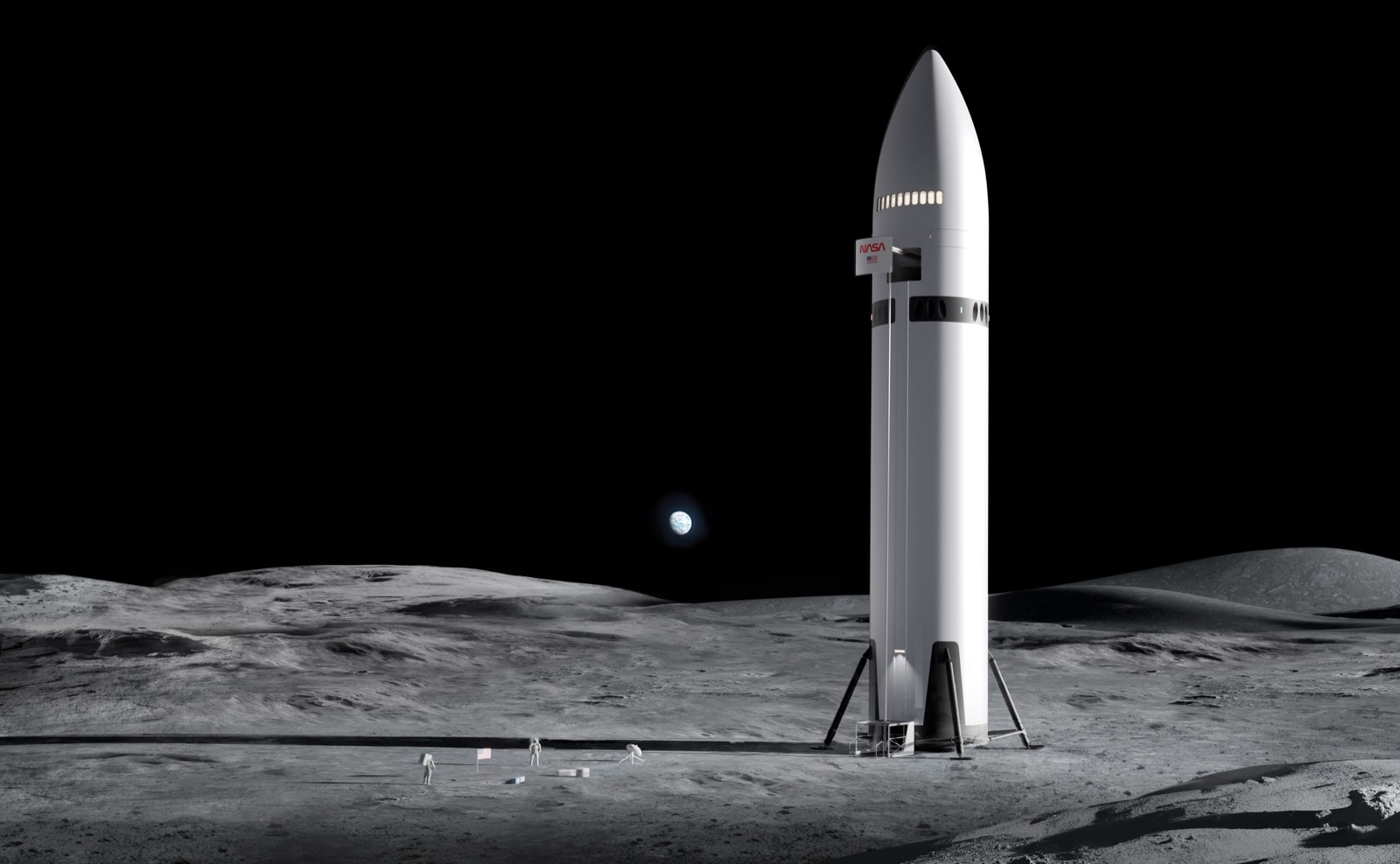
SpaceX is building Starship to land NASA crews near the lunar south pole, now planned on Artemis IV rather than Artemis III, and then to carry cargo and people to Mars. NASA added an Earth-orbit docking demo as Artemis III. Starship reached orbit for the first time on Flight 14 on September 28, 2026. That flight was not a propellant-transfer demonstration.
01 / 06
Moon first, then Mars
HLS is not a side contract. It is the tanker-fed lander NASA is paying SpaceX to prove — in parallel with Blue Origin’s Blue Moon, and after an Earth-orbit docking demo on Artemis III.
Prove the stack · 2023–
Starship and Super Heavy fly as one vehicle from Starbase. Every tanker, lander, and Mars ship uses this stack.
Tanker loop · Next
Cryogenic ship-to-ship transfer fills a departing Starship in low Earth orbit — the gate that opens a lunar landing and Mars.
Artemis III · Mid-2027
NASA’s mid-2027 plan is a crewed Orion docking demo with Starship HLS and/or Blue Moon pathfinders in low Earth orbit — not a landing.
HLS demo · To come
NASA still requires an uncrewed Starship HLS landing (and ascent) before crew board the lander. No official demonstration window has been published.
Artemis IV · 2028
NASA’s current target for the first crewed landing is early 2028. Which provider flies it — Starship HLS or Blue Moon — depends on who is ready.
Mars cargo · Ahead
Cargo Starships leave during a transfer window using the same tanker architecture a lunar lander needs. No public cargo-ship assignment exists yet.
02 / 06
Vehicle variants
The test articles flying from Starbase are the common core. Destination work is the variants that peel off that core.
The flying stack
Every destination variant launches on the same booster and ship architecture now in flight test at Starbase.
NASA lunar lander
Landing legs, elevators, and surface systems instead of an Earth-return heat shield. NASA has not assigned the first crewed landing to this vehicle alone — Blue Moon is the other HLS.
The missing loop
A fleet of tankers fills a departing ship in low Earth orbit. Without this, HLS and Mars stay in charts.
Entry, descent, landing
Heat shield and EDL for a thin CO₂ atmosphere, then cargo first and crew later across a 26-month window.
03 / 06
Program milestones
5 of 9 tracked gates are behind us — in-orbit refueling is still the vehicle gate that opens a lunar landing.
NASA selected SpaceX Starship as the Human Landing System to return crews to the lunar surface.

Starship and Super Heavy left the pad as one vehicle. It is the stack every tanker, lander, and Mars ship will fly.

Mechanical recovery of Super Heavy is the reuse path a tanker fleet needs to fill a departing ship.
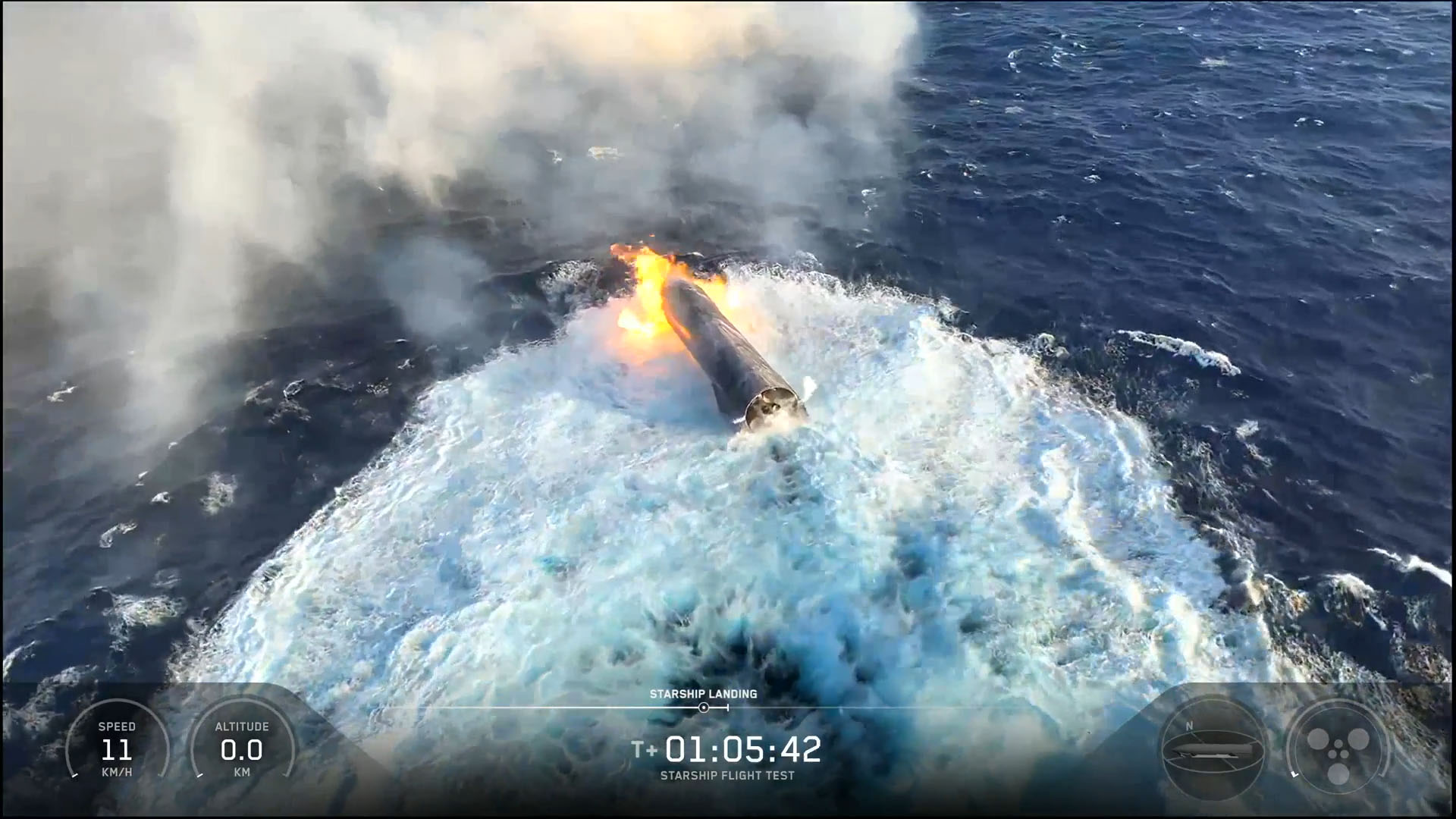
Ship 40 floated after splashdown, the first upper stage that can be inspected rather than written off.
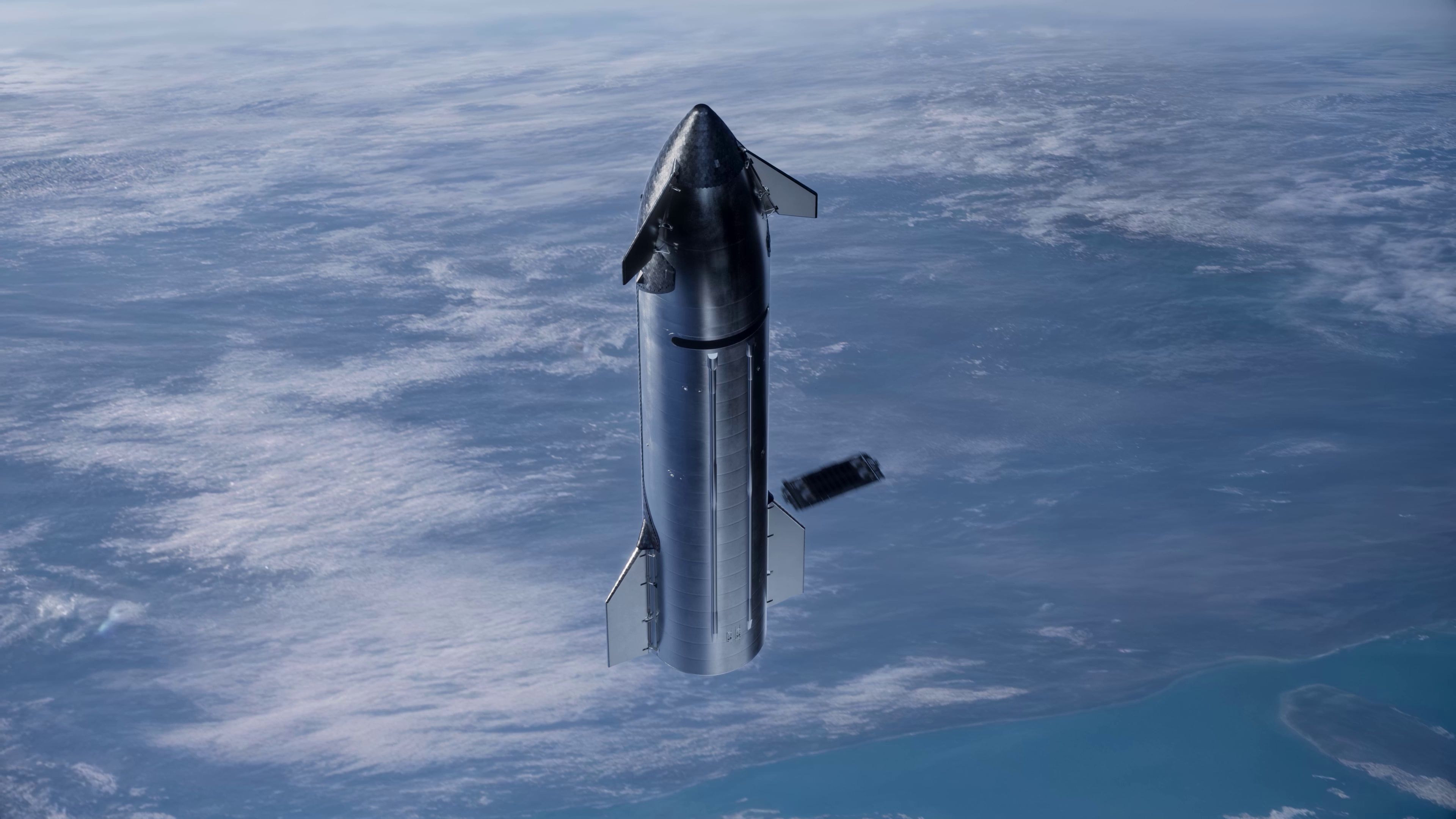
Ship 41 reached orbit on Flight 14 on September 28, 2026 and deployed 26 Starlink V3 satellites.
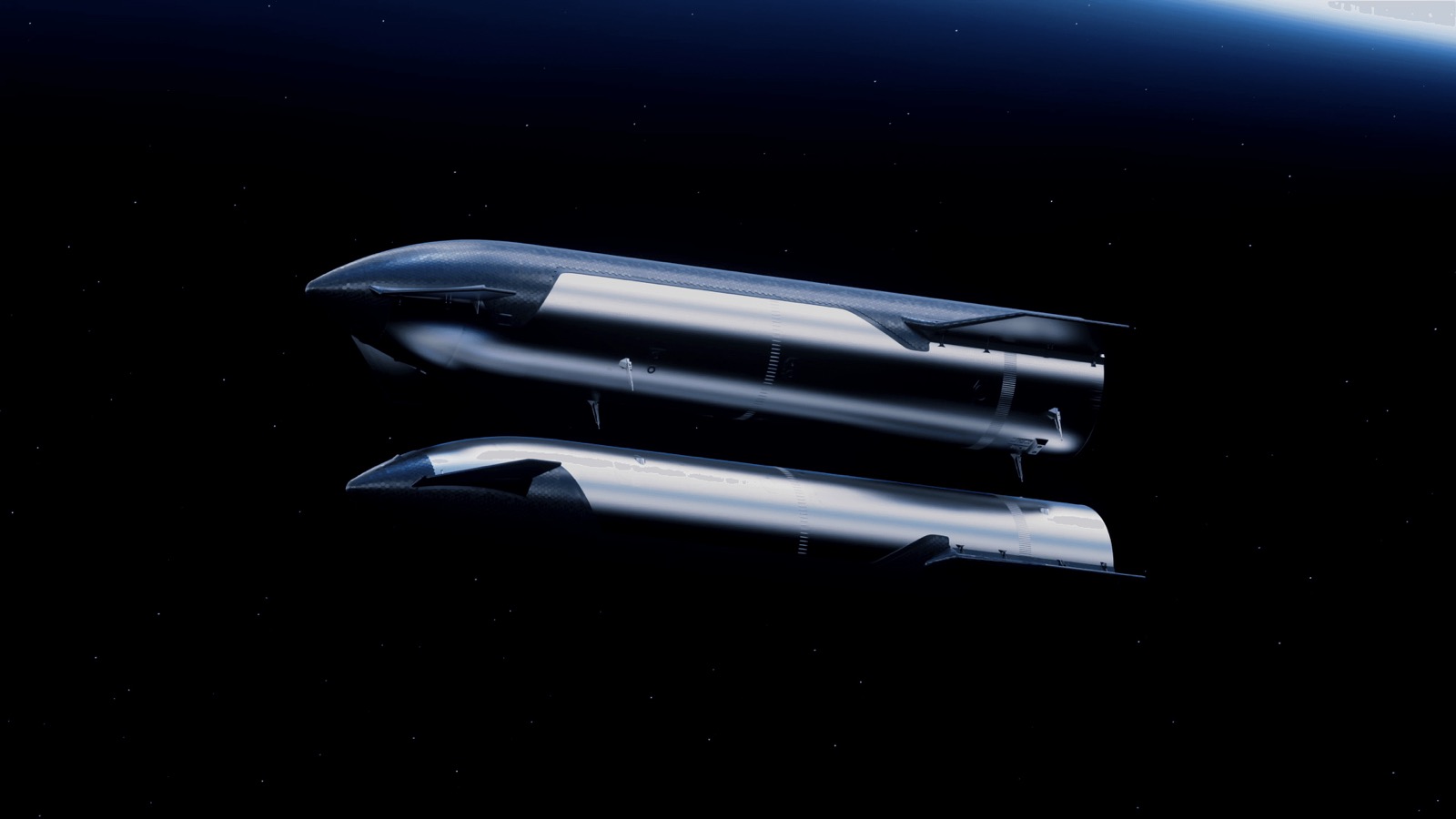
Propellant transfer between Starships is the gate that turns a LEO vehicle into a Moon and Mars vehicle.
A cargo or uncrewed HLS Starship lands on the Moon. It is NASA's required demonstration before crew.
Crew transfer from Orion into a commercial lander for a south-pole stay. NASA’s current target is Artemis IV in 2028. Provider is not locked.
Uncrewed cargo toward Mars during a transfer window, using the tanker architecture HLS is paying to prove.
04 / 06
Lunar architecture
A Starship lunar landing is a tanker-fed lander, not a single launch from Texas to the south pole. NASA’s first crewed landing is now Artemis IV; which provider flies it is not locked.
Super Heavy lifts a Starship from Starbase. HLS and tanker variants share this ascent before their missions diverge.
Tanker Starships top off the lander in low Earth orbit until it holds enough propellant for trans-lunar injection.
HLS flies to near-rectilinear halo orbit and meets Orion. Two crew transfer in for descent.
The lander touches down near the south pole for roughly a week of EVAs, then returns the crew to Orion.
05 / 06
What gates the destinations
This is not a NASA or SpaceX launch probability. It tracks public destination gates rather than the next test flight from Starbase. Those gates are tanker architecture, propellant transfer, the HLS lander variant, and the uncrewed landing NASA requires before crew.
Design public, not flown
Lunar and Mars missions need a depot of tanker Starships in low Earth orbit. Starship reached orbit for the first time on Flight 14 on September 28, 2026. A tanker flight and a propellant-transfer demo have not flown.
Not demonstrated
Ship-to-ship cryogenic transfer is the gate that turns a LEO-class vehicle into a Moon and Mars vehicle. SpaceX has not published a completed on-orbit transfer.
In development
The Human Landing System drops the Earth-return heat shield in favor of landing legs, elevators, and surface systems. NASA reports vendor progress. No integrated lander has been stacked in public.
Not scheduled in public
NASA requires an uncrewed Starship HLS landing on the Moon before crew. No official demonstration window has been published.
Tied to NASA + dual HLS
NASA’s current target for the first crewed landing is early 2028 on Artemis IV. Which provider flies it, Starship HLS or Blue Moon, depends on who is ready. Artemis III is an Earth-orbit docking demo, not a landing.
Architecture only
Uncrewed cargo during a transfer window is the stated first Mars step. No public cargo-ship assignment or window commitment exists yet.
06 / 06
References
Primary program records used for this tracker. Destination scores are editorial estimates from public signals — not an official NASA or SpaceX probability.