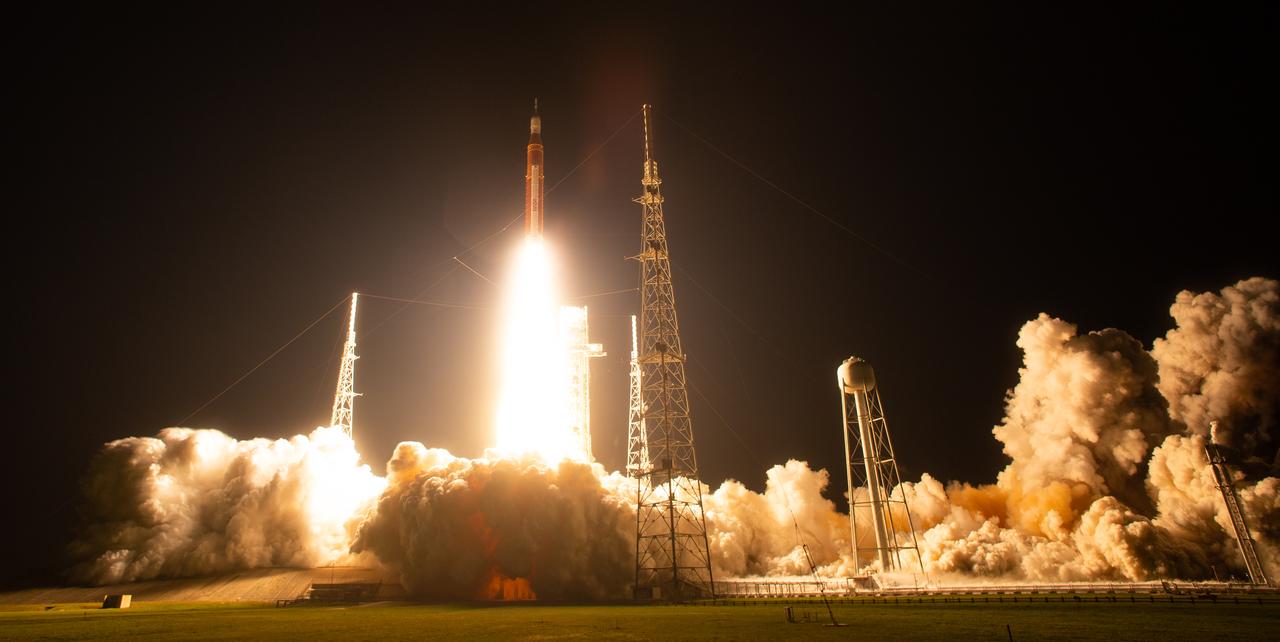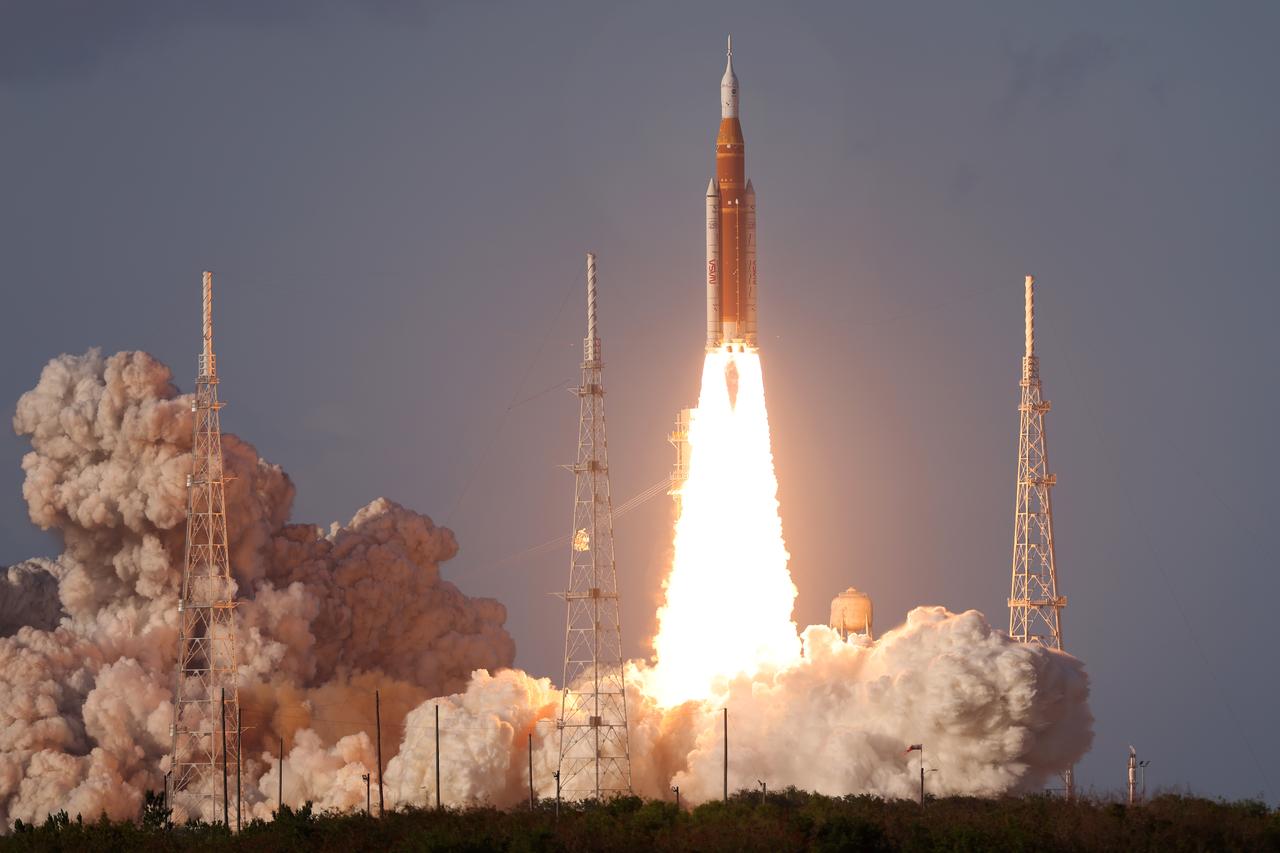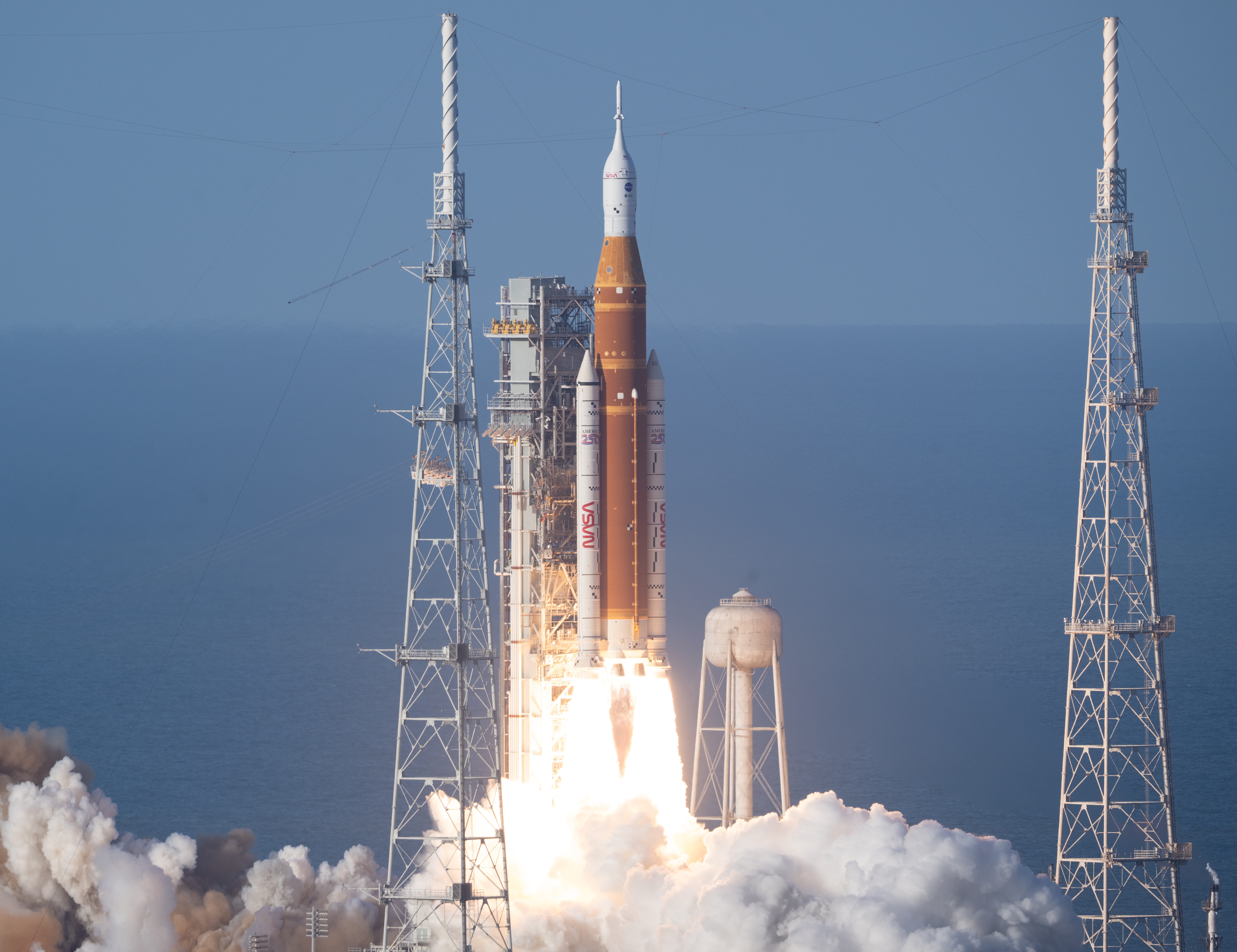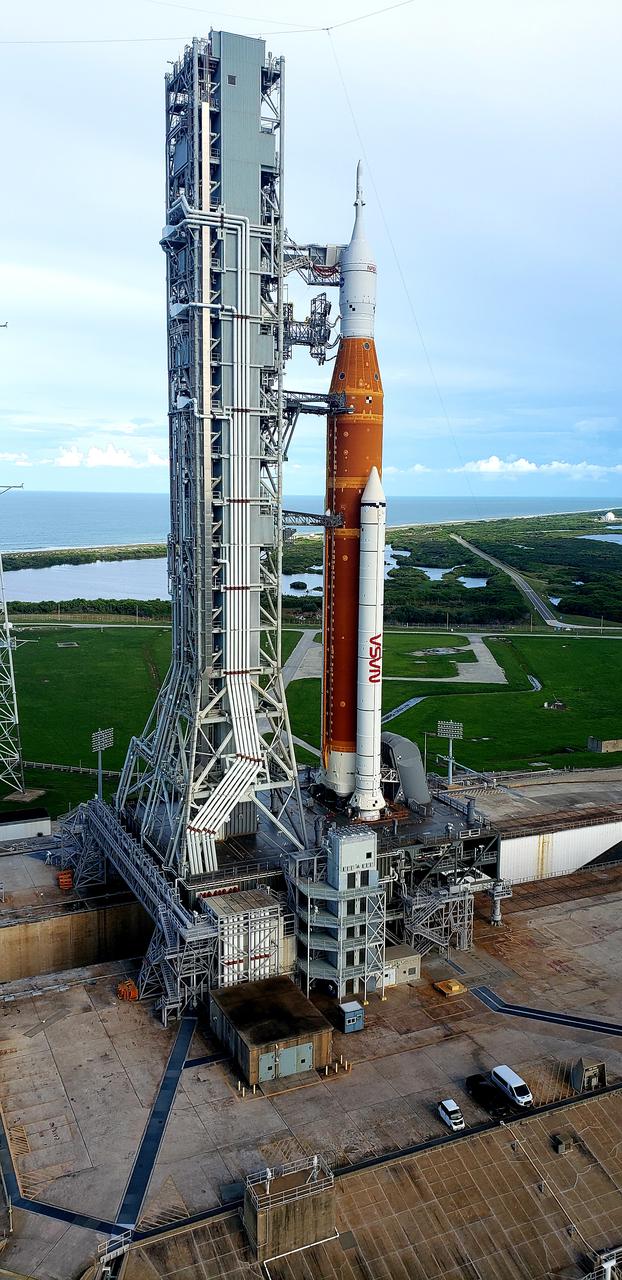
Space Launch System at Launch Complex 39B
All rocket programs
Moon RocketNASA · Super heavy-lift

Space Launch System

NASA's Shuttle-derived super heavy-lifter stands 98 meters tall and has flown twice. NASA cancelled Block 1B and Block 2 upgrades in February 2026 and is standardizing on the flying Block 1 vehicle. The Artemis III core is in the Vehicle Assembly Building, with RS-25 installation and booster stacking underway for an Earth-orbit docking demo.

Height
98 m
322 ft fully stacked
Liftoff thrust
39.1 MN
8.8M lbf at ignition
Payload to LEO
95 t
Block 1 · >27 t to TLI
Flight record
2-for-2
Artemis I and II

01 / 06

Configurations

One flying block

NASA is standardizing on the Block 1 vehicle that already flew twice. Block 1B and Block 2 upgrades — including the Exploration Upper Stage and Mobile Launcher 2 — were cancelled in February 2026.

Block 1

Flying

95 tto LEO

ICPS upper stage, four RS-25s, and five-segment boosters. Flew Artemis I and II. Artemis III stays on this block, with an inert spacer instead of ICPS because the mission remains in Earth orbit.

Upper stage
ICPS (Delta IV DCSS-derived); spacer on III
Core engines
4 × RS-25
TLI payload
>27 t to trans-lunar injection

Block 1B

Cancelled

105 twas LEO

Would have replaced ICPS with the Exploration Upper Stage. NASA cancelled EUS, the Universal Stage Adapter, and Mobile Launcher 2 in February 2026 and is standardizing on Block 1.

Upper stage
EUS · 4 × RL10C-3 — not proceeding
Mobile launcher
ML-2 cancelled with the block
Status
Cancelled Feb 2026

Block 2

Cancelled

130 twas LEO

Advanced-booster upgrade that would have pushed TLI past 43 metric tons. Cancelled with the Block 1B upgrades. NASA is not funding this configuration.

Boosters
Upgraded five-segment SRBs — not funded
TLI payload
43–46 t was the published TLI range
Status
Cancelled with Block 1B

02 / 06

Pipeline

From welding bay to pad 39B

A single SLS flight draws on four NASA centers and contractors. Artemis III hardware is already at Kennedy; Michoud is building what comes after.

  1. 01

    Core stage build

    Michoud Assembly Facility

    Friction-stir welding joins barrel sections into the 212-foot core stage. The Artemis III core left here in April 2026; later cores continue down this line.

  2. 02

    Green Run (first article)

    Stennis Space Center

    The Artemis I core fired all four RS-25 engines on the B-2 stand. Later cores have not repeated that full-duration Green Run before shipping to Kennedy.

  3. 03

    Booster casting

    Northrop Grumman, Utah

    Five-segment solid motors are cast in pairs. Each booster produces about 3.6 million pounds of thrust at liftoff — not each segment.

  4. 04

    Stack & launch ops

    Kennedy Space Center

    Booster stacking is in the VAB: three of five segments were up as of August 31, and RS-25 installation began August 24. Core mate, the spacer, and Orion are still ahead of rollout to 39B.

03 / 06

Program milestones

Proven twice, stacking the third

5 of 6 tracked gates cleared — the Artemis III core is in the VAB, with RS-25 installation and booster stacking underway.

Gates cleared83%
  1. Mar 2021Done

    Green Run complete

    The Artemis I core stage fired all four RS-25 engines together at Stennis for a full-duration eight-minute hot fire.

  2. Aug 2022Done

    Stacked at LC-39B

    The 98-meter rocket rolled out and stood fully stacked on pad 39B for its first launch campaign.

  3. Nov 16, 2022Done

    First flight — Artemis I

    SLS Block 1 lifted off on its debut, sending Orion toward the Moon with margin to spare.

  4. Apr 1, 2026Done

    First crew — Artemis II

    The rocket's first crewed flight carried four astronauts around the Moon and back.

  5. NowIn work

    Artemis III core at Kennedy

    The next core is in the VAB. RS-25 installation began August 24, and three of five booster segments were stacked as of August 31.

  6. Feb 2026Done

    Block 1B cancelled

    NASA cancelled the Exploration Upper Stage, Universal Stage Adapter, and Mobile Launcher 2 in February 2026.

04 / 06

What gates the next flight

Signals to watch

This is not a NASA launch probability. It scores public SLS production and test signals — Kennedy stacking, Michoud manufacturing, booster supply, and the cancelled Block 1B path — against what the next flight requires.

Core stage production

55%

III core in the VAB

The Artemis III core is in the VAB. NASA began installing RS-25s E2054, E2057, E2048, and E2052 on August 24 and has not posted that the install is finished. Michoud continues later cores; those articles are not the III stack.

RS-25 engine supply

50%

New engines in production

Flights draw from the 16 reused Shuttle-era RS-25Ds plus new-build RS-25E engines entering certification at Aerojet Rocketdyne.

Boosters

68%

3 of 5 segments stacked

Northrop Grumman said on August 31 that three of five Artemis III segments were stacked on the mobile launcher and the forward assemblies had been delivered. The crew viewed that integration on September 2. Each booster produces about 3.6 million pounds of thrust.

Green Run / stage testing

20%

First-article path only

The Artemis I core completed a full-duration Stennis Green Run in March 2021. Later cores, including Artemis III, have not repeated that campaign before shipping to Kennedy.

Block 1B evolution

30%

Cancelled Feb 2026

NASA cancelled the Exploration Upper Stage, Universal Stage Adapter, and Mobile Launcher 2. The agency is standardizing on Block 1.

Integrated launch campaign

18%

VAB stacking underway

Booster segments and the core are in the VAB, and engine installation has started. Wet dress and countdown rehearsals still wait on a complete stack and a committed launch period.

05 / 06

References

Sources and references

Primary program records used for this tracker. Readiness figures are editorial estimates from public signals — not an official NASA launch probability.

06 / 06

Related missions

SLS on the catalog

Recent catalog entries flying on the Space Launch System.