Investigation closed
FAA accepted the NG-3 mishap report and authorized return to flight, with corrective-action verification still required.
Blue Origin's orbital heavy-lift rocket is back in return-to-flight watch after NG-3 proved booster reuse but exposed the upper-stage fix list for the next campaign.
Vehicle
New Glenn 7x2
7 BE-4 / 2 BE-3U
Launch site
LC-36
Cape Canaveral SFS
FAA state
Authorized
Corrective actions before flight
Window
Target pending
Awaiting official payload, window, and mission page

Latest flight
NG-3 return review
Next campaign
NG-4 return-to-flight
Awaiting official payload, window, and mission page
Campaign readiness
53%
Checklist
7/15
47% of public gates closed
Return-to-flight watch
The FAA closed the April 19, 2026 NG-3 mishap investigation on May 22, citing a cryogenic leak that froze a hydraulic line and produced a second-stage thrust anomaly. Blue Origin identified nine corrective actions, and New Glenn can return to flight once those actions and normal licensing requirements are satisfied.
FAA closed
May 22, 2026
Cause
Cryogenic leak
Fix list
9 actions
Public gates that move New Glenn from cleared-to-fly into real launch-watch mode.
FAA accepted the NG-3 mishap report and authorized return to flight, with corrective-action verification still required.
Blue Origin must implement and verify nine corrective actions tied to the upper-stage cryogenic leak and thrust anomaly.
The next public payload, target orbit, and real launch window need to replace placeholder manifest dates.
Rollout, tanking, range notices, recovery-zone assets, and livestream publication move the page into launch-watch mode.
New Glenn has orbital reach and booster reuse evidence; the pressure now sits on upper-stage reliability and customer delivery.
The next flight has to show that the NG-3 second-stage corrective actions protect target-orbit delivery.
NG-2 and NG-3 turned first-stage recovery from aspiration into flight evidence; the next campaign needs to keep that record clean.
The program needs a clean payload handoff after BlueBird 7 separated and powered on but could not sustain operations from its too-low orbit.
Blue Origin's 2026 opportunity depends on converting return-to-flight clearance into repeatable pad flow for commercial, civil, and lunar missions.
Three orbital launches, newest first, with booster and payload outcomes separated.
The reused NG-2 booster landed again, but BlueBird 7 reached a lower-than-planned orbit and is being deorbited after an upper-stage thrust anomaly.
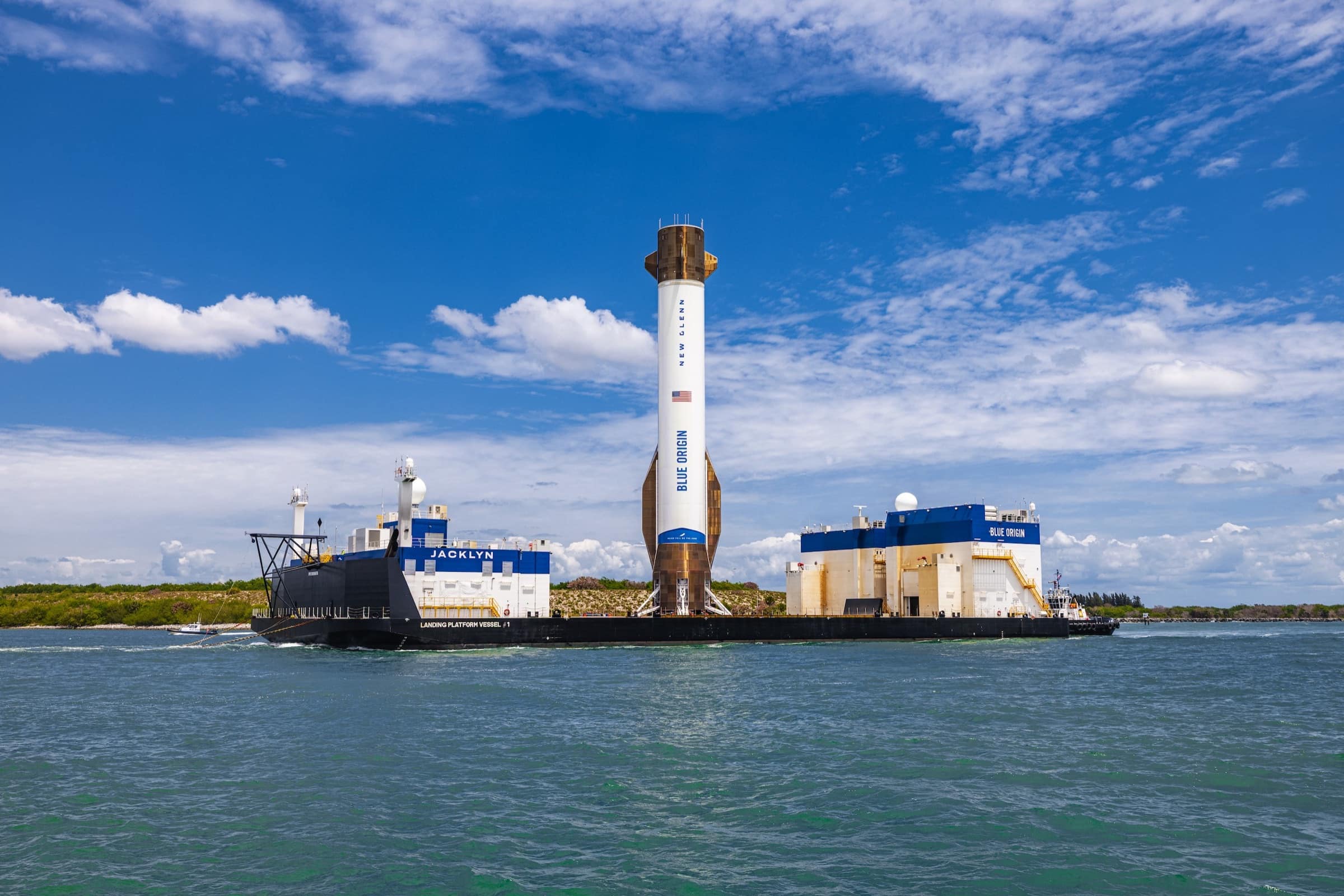
New Glenn deployed NASA's ESCAPADE twin spacecraft to their loiter orbit and landed the first stage on Jacklyn.
New Glenn reached its intended orbit with Blue Ring Pathfinder; the first-stage landing attempt failed after a reentry-burn restart issue.